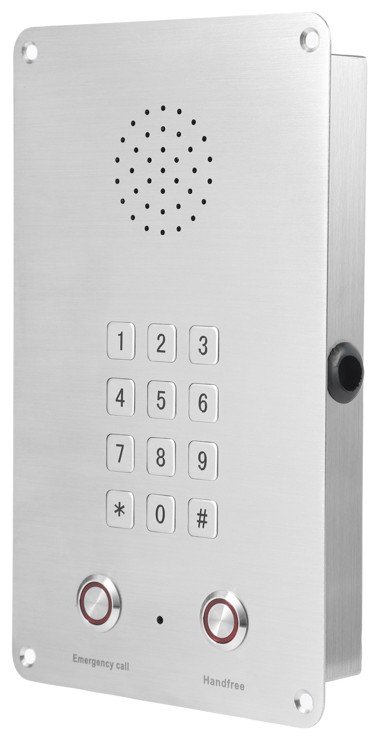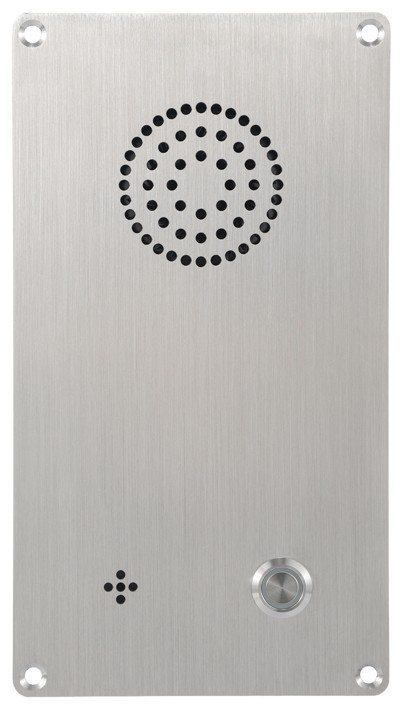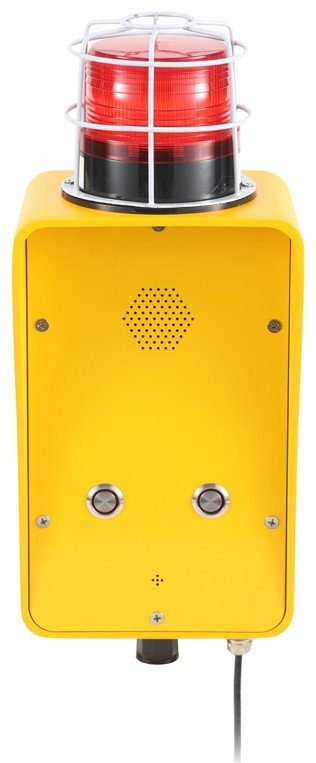
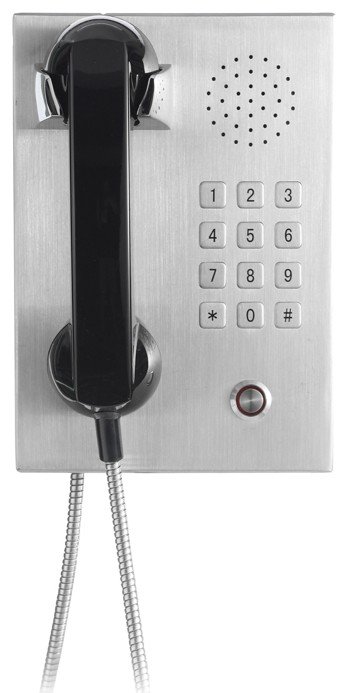
SUS304 faceplate, inside and out
The exposed plate is brushed stainless steel, with four corner screws and a smooth edge. The faceplate and keypad are stainless, so cleaning and disinfection do not attack the finish.
Stainless intercom
A vandal-resistant SUS304 stainless steel speed-dial phone for prisons, hospitals and public buildings, with one-touch calling over SIP/IP.
Overview
Built around a brushed SUS304 stainless steel shell, this wall-mounted phone is designed for high-traffic public spaces where equipment must resist wear and tampering. The handset, buttons, buzzer and circuit board use a multi-layer sealed structure.
Calls are carried over standard SIP/IP, with clear echo-free audio and one-touch speed dialing. The slim housing keeps the phone close to the wall, and the grounded shell is electrically isolated from the internal circuit.
Capabilities
The exposed plate, keypad and handset fittings are stainless steel, so cleaning and disinfection do not attack the finish.
The handset, buttons, buzzer and circuit board sit behind sealed layers, and the grounded shell is isolated from the internal circuit.
The keypad can be configured for one-touch speed dialing over SIP/IP, so a caller does not need to remember a number.
The stainless keypad is rated for at least five million presses, with contact resistance held to 30 ohms or less.
Built for prisons, hospitals and public buildings where the phone has to survive heavy, repeated use.
Call another phone by IP address with no registrar, or register three SIP accounts with primary and backup servers.
Three independent registrations with failover keep the phone reachable when a server or network path goes down.
Function keys can mark up to eight phones, fire a stored alarm over multicast or UDP, and join site-wide paging groups.
Built details
This is the stainless face of the platform: a brushed SUS304 plate, a sealed handset, a perforated speaker field and a keypad configured for one-touch speed dialing. The handset, buttons, buzzer and circuit board sit behind a multi-layer sealed structure, and the shell is grounded but isolated from the internal circuit. It is built for prisons, hospitals and public buildings where the phone has to survive being used.
The exposed plate is brushed stainless steel, with four corner screws and a smooth edge. The faceplate and keypad are stainless, so cleaning and disinfection do not attack the finish.
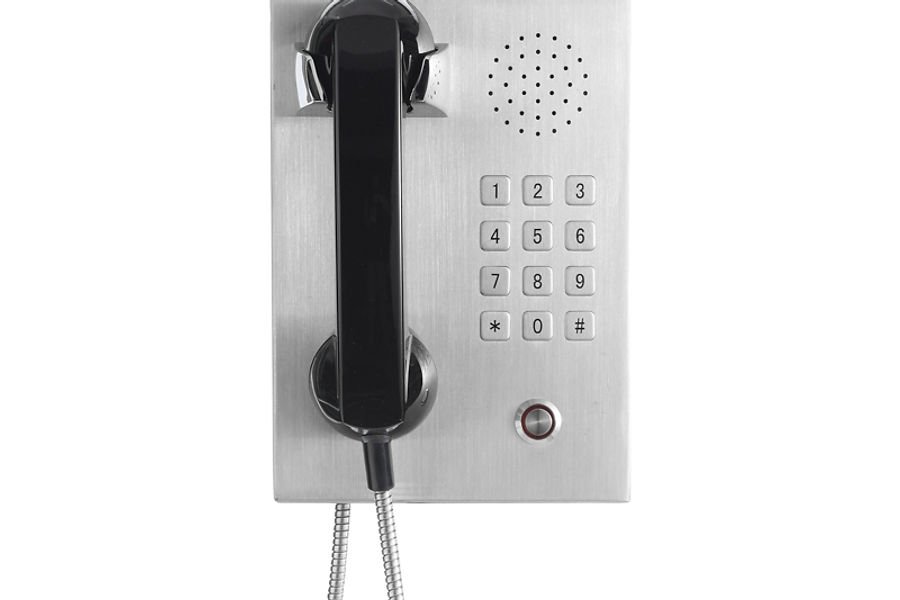
The handset, buttons, buzzer and circuit board are arranged in a multi-layer sealed structure. The shell is grounded but electrically isolated from the internal circuit, which protects the electronics from static and tampering.
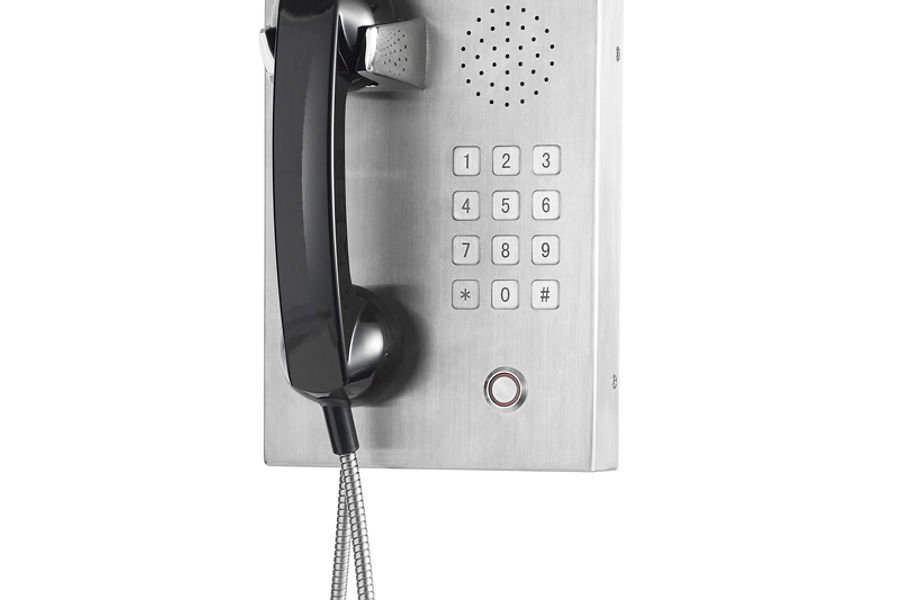
The keypad can be configured for one-touch speed dialing over SIP/IP. A caller does not need to remember a number; the phone can be set up with the destinations the site uses.
Every unit is assembled to order. Tell us the site conditions and we will confirm the enclosure, keys and power.
Discuss your siteThe shared platform
Waterproof, explosion-proof, cleanroom and intercom phones are not four different phones inside. They share one Allwinner V3s control board and one firmware; the site conditions decide the enclosure, keypad, handset, buttons and beacon around it. Every model can also call another phone directly by IP address, with no PBX in the path.
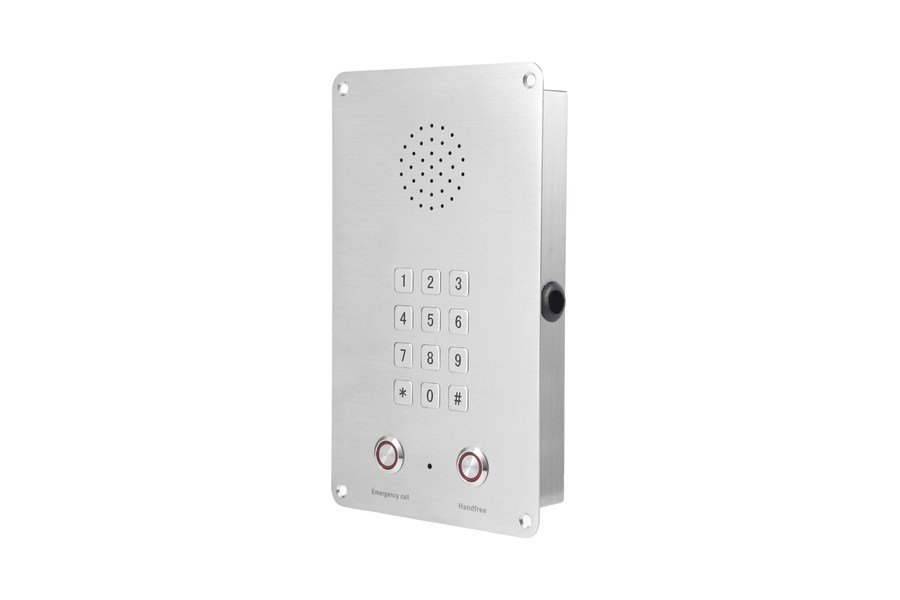
What changes
Slim stainless panels for doors, lobbies and elevator cars. One-touch buttons, hands-free audio and an optional camera.
Inside every version
The web interface on a waterproof phone is the same interface on the explosion-proof and cleanroom units. The enclosure changes what the firmware can drive — a beacon here, a relay there, a camera on the door panel. The call flow, paging stack and alarm logic do not change, and two phones can call each other directly by IP address without a PBX or registrar.
Each input, relay, LED and function key reports its state on the home page as it changes.
Paging, alarm and control
Three independent registrations, each with a primary and backup server, session timer, SRTP option and PCMU / PCMA / G722 / G729 codecs.
Hold a function key and up to eight target phones loop a marking tone; release to stop. A lease timeout stops it if the network breaks.
Upload a WAV, choose the trigger and play it through the phone amplifier. An optional dial number, relay and alarm light can fire with it.
Trigger a stored alarm WAV over multicast or UDP broadcast. Phones with the same ID play their own copy, so a weak Wi-Fi AP does not block it.
Send live audio to a multicast group for site-wide paging. The status page shows when the channel is active and which group is in use.
Each function key can dial, hotline, mark, multicast, start a local broadcast, fire a relay, raise an alarm, speed-dial, answer or hang up.
The home page shows each input, relay, LED and button state as it changes. Outputs can follow ringing, calls, alarms or multicast.
USB headset support with separate microphone gain and volume, alongside handset and hands-free gain settings and selectable ring tones.
VLAN, LLDP, SNMP, NTP, Modbus, OpenVPN, ONVIF / RTSP, action URLs, SIP PnP, config backup, logs and packet capture.
Call another phone by IP address with no PBX, registrar or server in between — useful for two-point links, temporary sites and simple gate, lift or desk pairs.
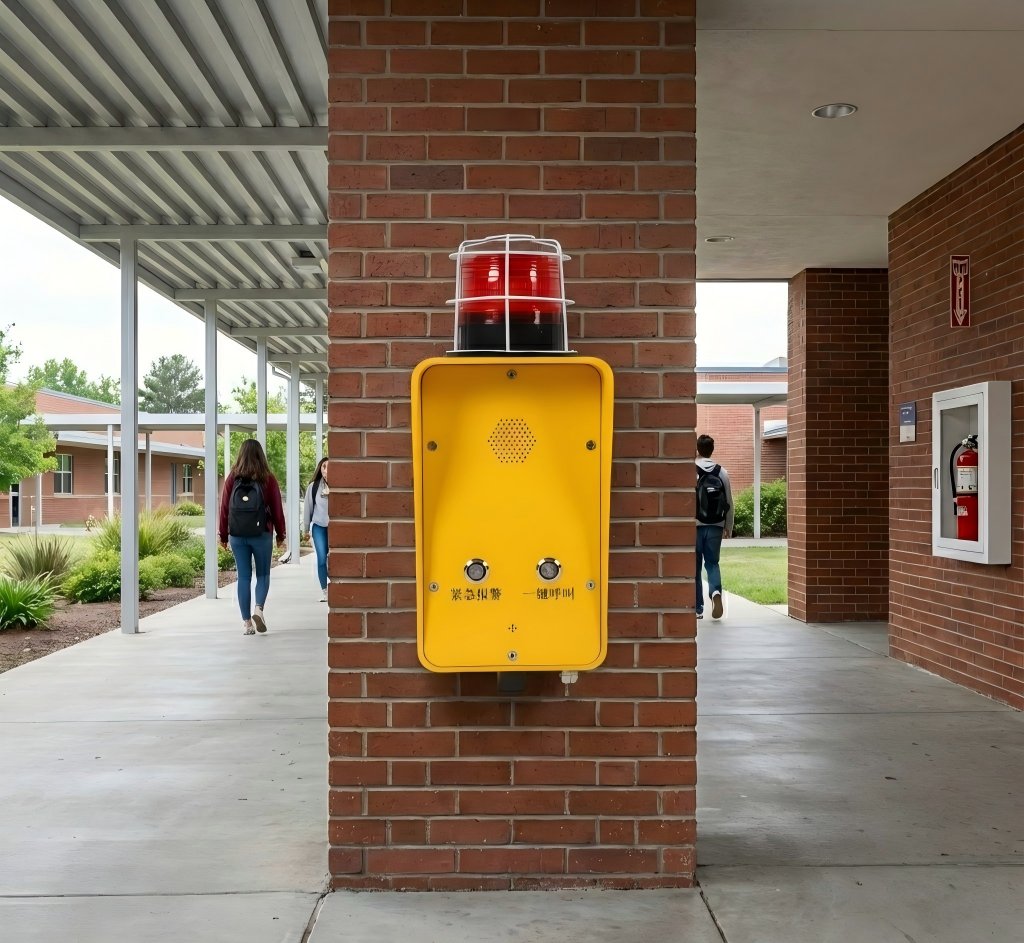
Where it works
Entrances, elevator cars, secured doors and campus walkways need a call point that is obvious in an emergency and simple for anyone to use. Single-press and hands-free models keep the interaction short and clear.