Two metal buttons, no dial pad
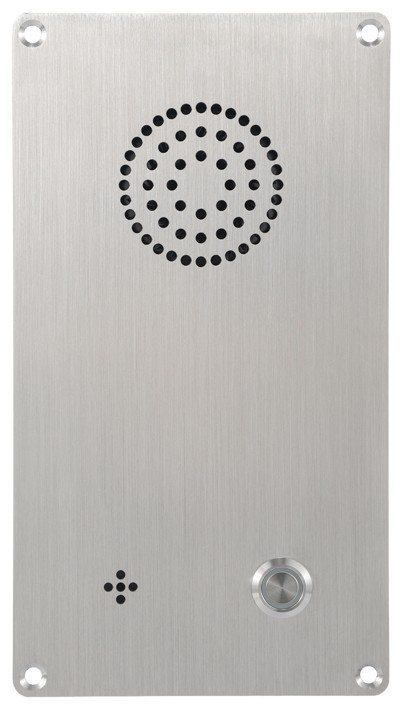
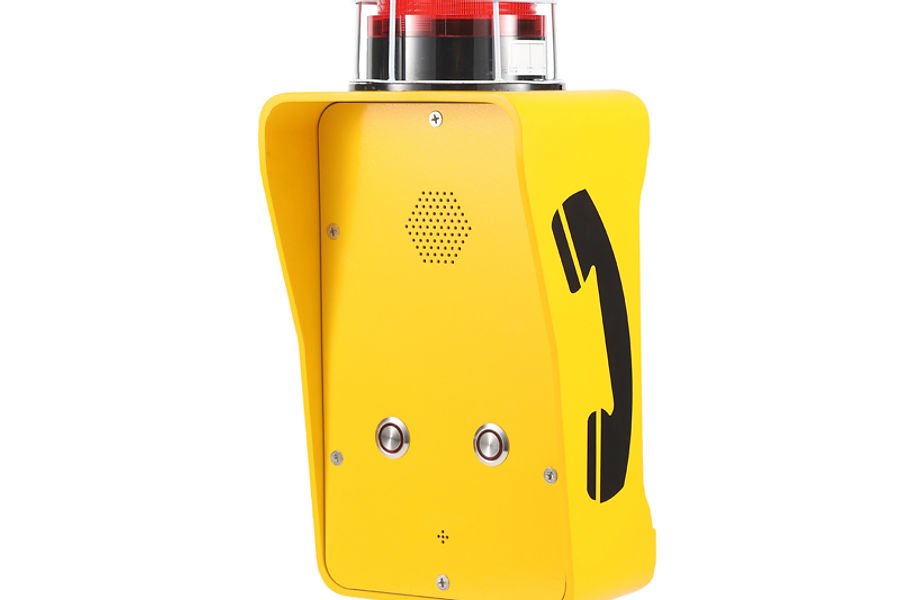
The interface is two metal buttons; there is no keypad to misread under gloves or in poor light. The call destination is configured remotely, and multiple numbers can sit behind the call button.
Emergency intercom
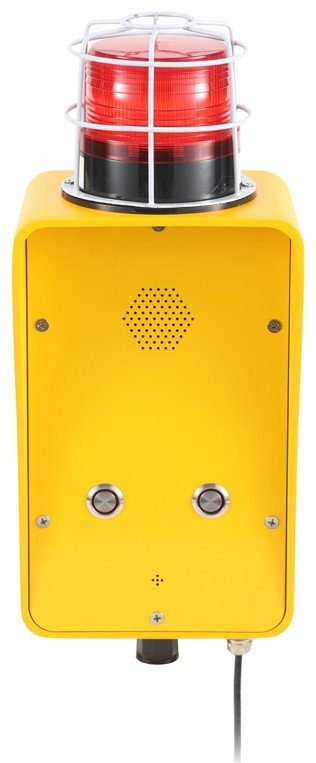
A one-button emergency intercom for outdoor industrial and public sites, with a 30W loudspeaker, dual indicator lights and SIP, fiber or 4G connectivity.
Overview
The PT-IPT4 gives staff and visitors a single, obvious way to call for help. Multiple destination numbers can be assigned to the emergency button, and the built-in 30W loudspeaker supports clear hands-free conversation and broadcast announcements.
The composite housing is sealed for outdoor use and can be customized with color and labeling. It connects over SIP, analog, direct fiber or 4G, and supports 24-60V programmable telephone exchanges, network switches and fiber ring networks. Auto-answer lets the control room listen to the site before the caller hangs up.
Capabilities
A single metal call button dials a preset destination. Multiple numbers can sit behind it, so the call still lands if the first path is busy.
A 30W speaker carries the ring and hands-free voice across traffic, machinery and wind, with a 3W monitor path for talkback.
Status lights show the call state, while a caged red beacon above the housing gives the point a visual signature at a distance.
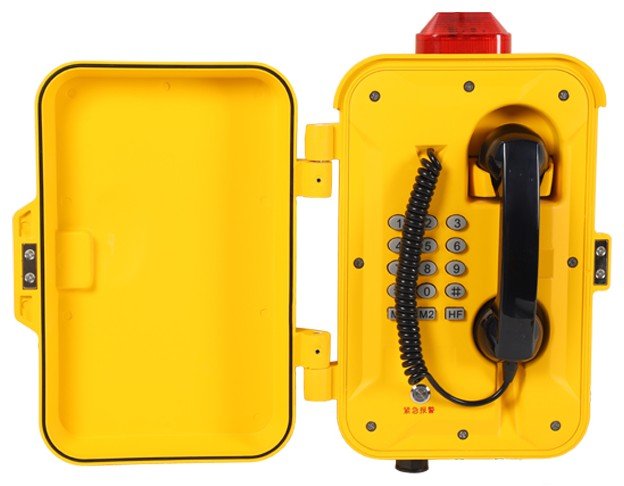
The composite housing closes around a single cable gland and a stainless armored handset cord for outdoor industrial sites.
Incoming calls can answer automatically, letting the control room listen and speak while the caller is still at the panel.
Choose the uplink that suits the site — SIP with three accounts and failover, analog, direct fiber or a 4G connection.
The caller can lift the handset for privacy or use the 30W speaker and microphone hands-free while working.
Two phones can call each other directly by IP address, which suits gate pairs, temporary sites and simple point-to-point links.
Built details
The PT-IPT4 takes the keypad out of the emergency call. A sealed composite housing holds a 30W speaker, a handset and two metal buttons; a caged red beacon sits on top. The call destination is configured remotely, and multiple numbers can sit behind the call button. Auto-answer lets the control room listen while the caller is still at the panel. SIP, analog, direct fiber and 4G options connect it to the site network.
The interface is two metal buttons; there is no keypad to misread under gloves or in poor light. The call destination is configured remotely, and multiple numbers can sit behind the call button.
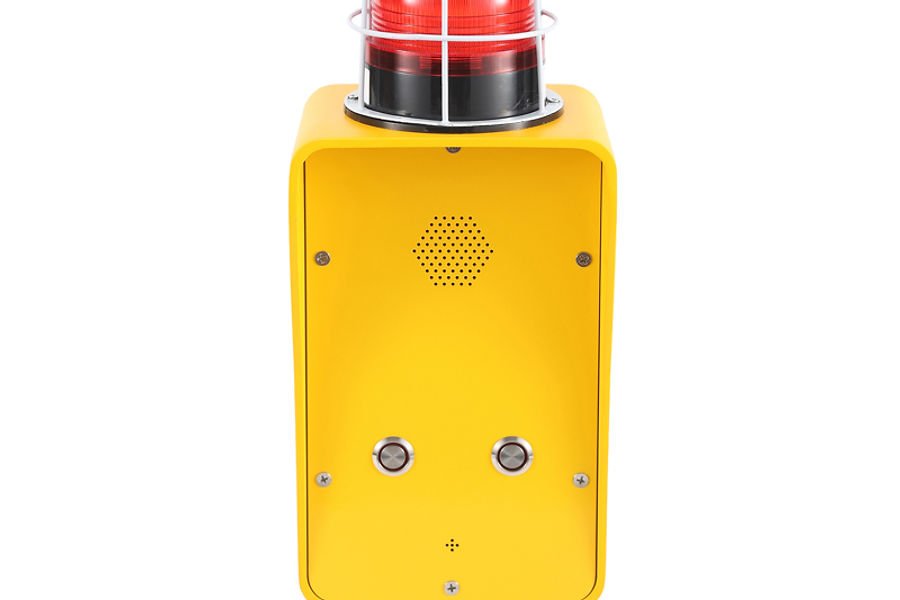
The red beacon sits above the housing behind a wire cage. It gives the call point a visual signature in a yard, tunnel or roadside position, while the 30W speaker carries the voice.
The composite housing is sealed to IP65, with a single cable gland at the bottom. The handset hangs on an armored cord, and the face can be labeled for the site. SIP, analog, fiber and 4G options cover the connection.
Every unit is assembled to order. Tell us the site conditions and we will confirm the enclosure, keys and power.
Discuss your siteThe shared platform
Waterproof, explosion-proof, cleanroom and intercom phones are not four different phones inside. They share one Allwinner V3s control board and one firmware; the site conditions decide the enclosure, keypad, handset, buttons and beacon around it. Every model can also call another phone directly by IP address, with no PBX in the path.

What changes
Sealed composite shells with gasketed doors, caged beacons and armored handset cords. The same board works in a roadside cabinet, a tunnel phone or a solar tower.
Inside every version
The web interface on a waterproof phone is the same interface on the explosion-proof and cleanroom units. The enclosure changes what the firmware can drive — a beacon here, a relay there, a camera on the door panel. The call flow, paging stack and alarm logic do not change, and two phones can call each other directly by IP address without a PBX or registrar.
Each input, relay, LED and function key reports its state on the home page as it changes.
Paging, alarm and control
Three independent registrations, each with a primary and backup server, session timer, SRTP option and PCMU / PCMA / G722 / G729 codecs.
Hold a function key and up to eight target phones loop a marking tone; release to stop. A lease timeout stops it if the network breaks.
Upload a WAV, choose the trigger and play it through the phone amplifier. An optional dial number, relay and alarm light can fire with it.
Trigger a stored alarm WAV over multicast or UDP broadcast. Phones with the same ID play their own copy, so a weak Wi-Fi AP does not block it.
Send live audio to a multicast group for site-wide paging. The status page shows when the channel is active and which group is in use.
Each function key can dial, hotline, mark, multicast, start a local broadcast, fire a relay, raise an alarm, speed-dial, answer or hang up.
The home page shows each input, relay, LED and button state as it changes. Outputs can follow ringing, calls, alarms or multicast.
USB headset support with separate microphone gain and volume, alongside handset and hands-free gain settings and selectable ring tones.
VLAN, LLDP, SNMP, NTP, Modbus, OpenVPN, ONVIF / RTSP, action URLs, SIP PnP, config backup, logs and packet capture.
Call another phone by IP address with no PBX, registrar or server in between — useful for two-point links, temporary sites and simple gate, lift or desk pairs.
Where it works
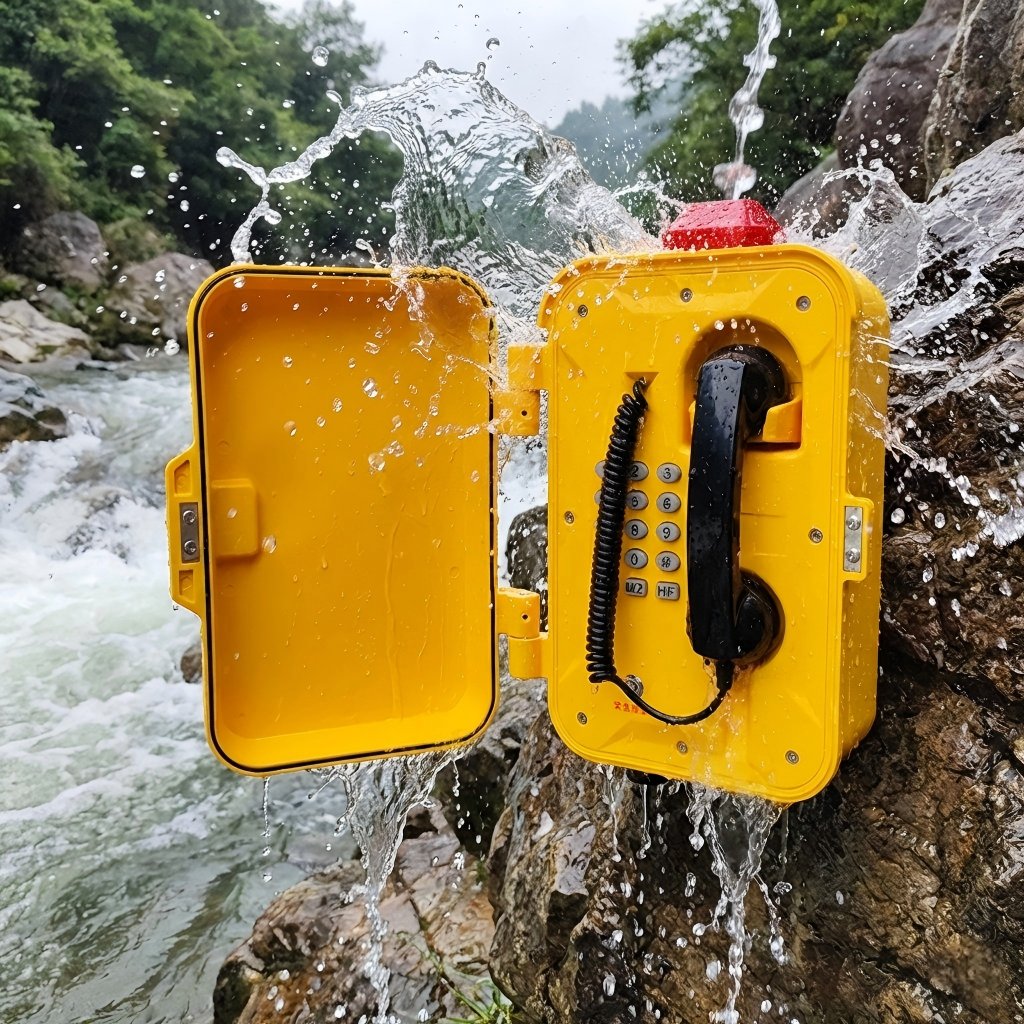
Tunnels, docks, car parks and outdoor process areas leave equipment exposed to rain, spray and temperature swings. These models are built around sealed enclosures and protected connections, so the call path stays available when conditions turn.